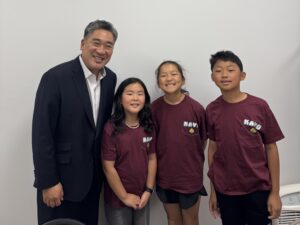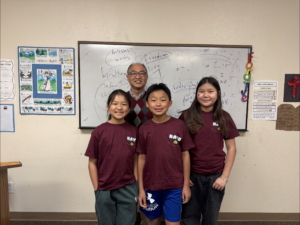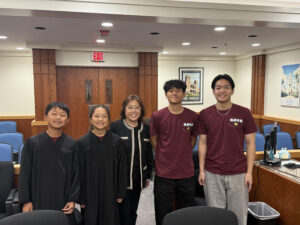

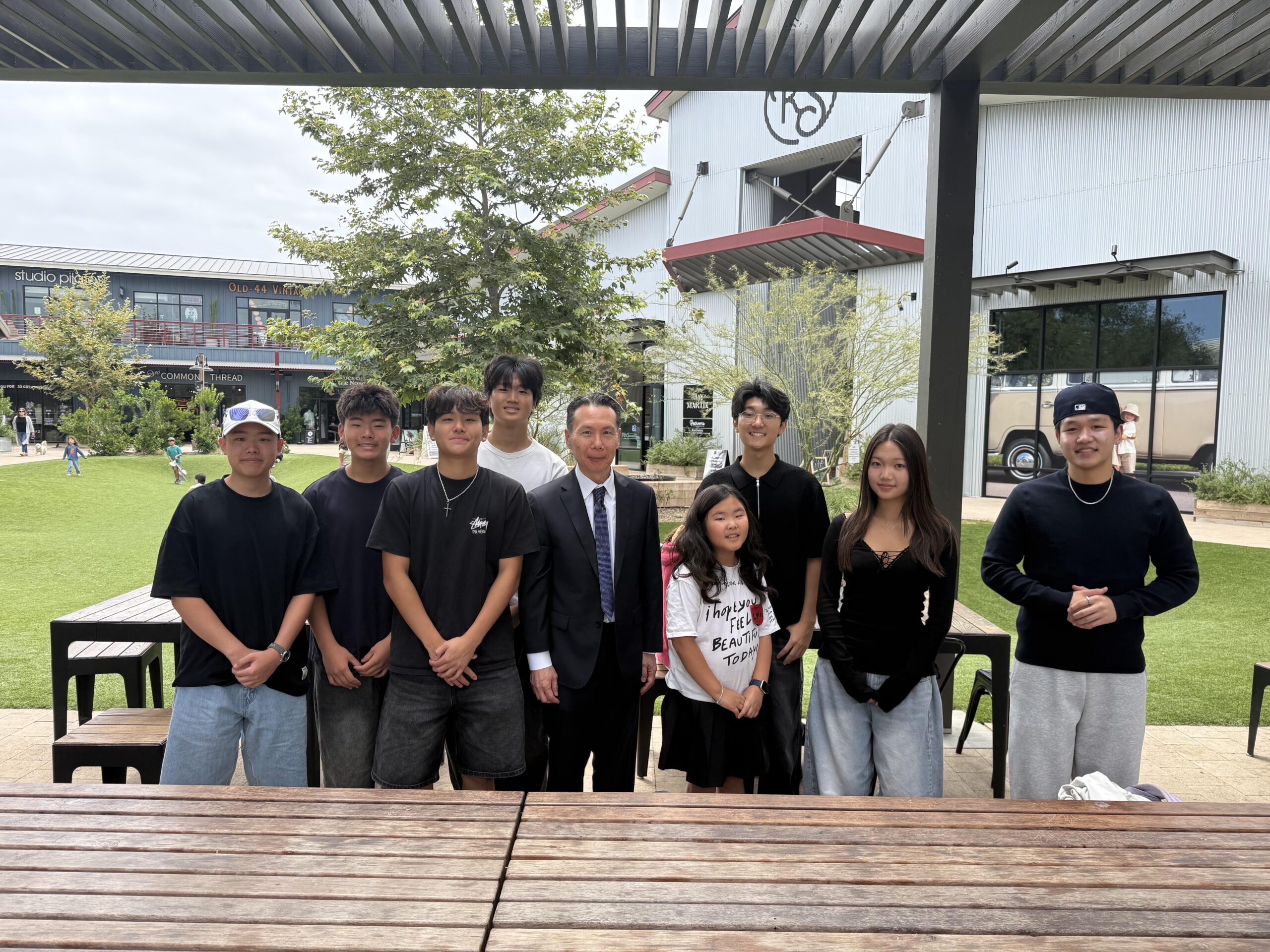
In the month of July, members of KAYO were given the valuable opportunity to interview Public Defender Eugene Sung of Orange County Public Defender’s Office. During the interview, he discussed his career path, the importance of the various lessons he learned throughout his lifetime experiences, and the realities of working within the legal world. Attorney Sung’s perspective offers a profound look inside the public defense system while shedding light on the many challenges and responsibilities that comes with his job. This interview reflects KAYO’s mission of connecting Korean American communities with accomplished professionals whose experiences can inform and empower future generations.
PERSONAL BACKGROUND
- Q. Can you introduce yourself and tell us a little about where you grew up as well as what your family background looks like?
- A. Assistant Public Defender Eugene Sung is a Second Generation Korean American whose parents immigrated to the United States prior to the 1970s (before the mass Korean immigration wave). Attorney Sung’s father had worked with the US military, ultimately receiving a sponsor to study in the United States. By the time Sung’s parents had him, they were situated in the San Fernando Valley, however he himself later moved to Tarzana. Now, Sung is 56 years old and works as a Public Defender in Orange County, situated in Santa Ana.
- Q. What was it like growing up Korean-American? Did you feel like you had to navigate between 2 worlds?
- A. According to Attorney Sung, the goal was to “assimilate,” not mix. Sung’s family was one of the two Korean families in their neighborhood, making it difficult to maintain a bicultural background since they were surrounded by a completely Western world. For a long time, Attorney Sung received certain racial comments that are still made today, and according to him, the best way to deal with these types of comments was to “educate.” According to Sung, the cause of these racial comments was “…an issue of education,” establishing that “If you teach them and let them know about you, then it will change their frame of reference over time.”
- Q. Were there any key mentors that shaped who you are today?
- A. Attorney Sung has had numerous mentors throughout his lifetime. He found his first mentor during a time of “desegregation” (LA Unified School District desegregation busing in the 1970s) when he was in the fourth grade. His teacher—Mrs. Taylor—was one of the first people to recognize the unique traits about him, ultimately contacting his family and getting him tested for the gifted program at his school. Attorney Sung describes how her message, that “it is your character that will always win the day, still resonates deeply with him today. In middle school, it was his drama class teacher who taught him improvisation skills and how to “think on his feet”, helping him later on in the litigation field. In college at UCSD, his professor (Psychology) taught him the reality of eyewitness reliability as Attorney Sung did research under him. Attorney Sung describes this process as “like being in a relay race, where each student is a baton”. Each mentor in a given student’s journey acts as a runner in this relay race of life, “passing” down the student (baton) to the next mentor (runner) in thier life. He feels that it is his duty now to be one of the runners and pass his baton down to the next person.
PATH TO LAW
- Q. When did you first think about becoming an attorney, and what drew you to law?
- A. As a Psychology major, Attorney Sung frequently asked himself if he wanted to do 6 years to get a PHD in Psychology. He describes two types of lawyers, litigators—the people on TV and in the courtrooms, and lawyers that advocate for their clients without ever appearing in the courtroom, which compelled Attorney Sung to the law during the middle of his undergraduate years. “Now, did I know exactly what I wanted to do? Absolutely not. It wasn’t until I got to law school that I found the area of law I felt I was really suited for.”
- Q. Did you face any moments where you doubted law was the right path? If so, how did you push through it?
- A. During the first semester of his second year of law school, he remembers sitting in the library on a Friday, with a large amount of casebook reading due Monday and wondering, “Is this what my life is going to be?” Instead of letting the workload overwhelm him, he went home, enjoyed his weekend, and trusted that he would figure it out, which ultimately proved true. Over time, he developed study methods that worked best for him and learned to view anxiety as something to acknowledge rather than fight, believing that because he had gotten through difficult situations before, he could do so again. He compared this mindset to riding a wave in the ocean instead of struggling to fight against it.
CAREER & PRACTICE
- Q. What areas of law have you practiced, and what does a typical day look like for you as an attorney?
- A. While in law school, he interned with the San Francisco Public Defender’s Office and initially planned to work for a nonprofit law firm, advocating for people whose civil rights had been violated. During his internship, he gained a deeper understanding of the challenges of public defense, but after graduating, he entered private practice because the San Francisco Public Defender’s Office was highly competitive and he did not receive a job offer. In private practice, he handled civil matters such as family law and civil defense while also taking on criminal defense cases due to his prior experience. He later returned to public service when opportunities arose at the Public Defender’s Office, where he found work that he genuinely enjoyed.
- Q. Have you ever experienced any kind of discrimination or bias as a Korean-American in the legal field? How did you handle it?
- A. As Attorney Sung resides in Orange County, CA, which consists of an ethnically diverse population and bar, he states that discrimination or bias as a Korean-American in the legal field is something he has rarely encountered, but to some level. He states that whenever he does face these issues, “it becomes an issue with education,” and rather than reacting, he educates and tries to understand them. He also comments on how the bar has diversified to women, people of color, and the LGBTQ+ community over the past 20 years, lessening the odds of discrimination or bias occurring in the legal field. Although he can’t speak for other areas across the United States, he states that Orange County is a great area for practicing law.
- Q. What’s a case or moment in your career that resonates with you the most and why?
- A. A case that resonated with Attorney Sung the most, was with a client he had worked with six or seven years ago as a public defender. The client was a nineteen year old, who got deceived by two individuals he met during juvenile probation. The client got charged with residential burglary as the getaway driver, during a robbery that the two individuals committed, despite having no knowledge of their intentions. In trial, Mr. Sung proved that the client was not guilty. Following the verdict, the client’s father came towards the client and started crying and hugging him. And at that moment, Mr. Sung told himself, “this is what being a lawyer is about.” This case helped him realize the impact that lawyers make and the importance of providing dedicated representation. As he explained, if this case was handled by another attorney, “I don’t know if they would’ve done the same job, or gotten the same luck.”
- Q. What is one misconception people have about attorneys?
- A. Attorney Sung believes that one of the greatest misconceptions surrounding attorneys is that they are egotistical or overly attached to the title of being an attorney. While he acknowledged that there are certainly individuals who take advantage of the status associated with the title, he emphasized that most attorneys are actually thoughtful, humble, and deeply grounded people. Reflecting on his own life outside of work, Attorney Sung explained, “I wouldn’t be wearing this shirt, I wouldn’t be wearing a tie, I wouldn’t be wearing my coat. I would be wearing a T-shirt and the type of jeans that have a hole in it.” He shared that people are often surprised to discover he is an attorney because he blends naturally into his community and does not define himself by his profession. Rather than seeking recognition, he believes that most attorneys simply view their career as one aspect of who they are. According to Attorney Sung, the stereotype of attorneys having inflated egos is largely a concept that the media portrays rather than an accurate reflection of his profession.
HIGH SCHOOL ADVICE
- Q. Do you speak Korean fluently? If so, how did you manage that? If not, what would you have done differently?
- A. Attorney Sung describes how he does not speak Korean fluently, calling it “one regret” that he still carries with him today. According to Attorney Sung, he did not grow up in an environment where Korean was spoken regularly, which made it difficult for him to become fluent. He explains that if he could do it over again, he would have wanted his parents to embed him more deeply in Korean culture and encourage him to speak the language more often from a young age. Attorney Sung believes that having more exposure to both the language and the culture would have helped him build a stronger connection to his Korean heritage. Although he is proud of his background, he wishes he had been given more opportunities to learn and practice Korean while growing up.
- Q. How important is it to know a second language in the legal field? Have you found it to be an advantage?
- A. According to Attorney Sung, he expresses his belief that it really depends on the clients that attorneys help. He explains that if attorneys are going to have international clientele that speak another form of language, then it would be beneficial to know a second language in the legal field. Attorney Sung says that he “represents a small portion of the Korean community who has trouble with the law” and although he needs an interpreter, he is still able to understand what his clients say so that it eliminates some of the communication barriers. He recommends becoming multilingual or bilingual as it opens up the opportunities to have more client representation in the future.
- Q. What does your college or pre-law preparation advice look like? What would you do differently if you were starting over?
- A. Attorney Sung advises students to read more. He states that he found his passion for reading after graduating from college and that he should have spent more time reading. Going into a profession that required a lot of reading, he strongly believes that if he had read more in his younger years, he would have been able to read faster. He also advises students to read more about analytical topics as the structure of both law school and being a lawyer is centered around analysis. Because practicing law involves learning about the law and applying it to real life situations, developing analytical skills is key. Because his psychology studies focused on a limited area of research, he also believes that he should have taken more philosophy and political science classes to sharpen his analytical skills.
- Q. What kinds of activities would you recommend for students wanting to pursue a legal career?
- A. For the analytical portion of being a lawyer, learn chess. Chess involves strategy, makes you think of your move, and the consequences of that move. Similarly, lawyers should think ahead and try to predict your opponents move so that you can gain the upper hand. The way chess wires your mind helps you anticipate things as a lawyer. Reading and having conversations are also important skills to build up. Activities that make you think and step out of your comfort zone.
IDENTITY & COMMUNITY
- Q. Were there any expectations from family or community that influenced your career choice?
- A. His parents supported him growing up and didn’t force expectations onto him. However, when he passed the bar and became a lawyer, his parents were super proud and his dad had the biggest smile on his face. Personally in high school, after watching a film about attorneys he swore he would never become one. So, being a lawyer found him rather than him pursuing law.
- Q. How do you stay connected to your Korean roots and community when working in a mainstream American profession?
- A. Attorney Sung describes how in Orange County, “there are many bar associations that lawyers can stay connected with”, in which he participates as a member of the Orange County Asian American Bar Association and the Orange County Korean American Bar Association (previously serving on the Board of Directors). According to Attorney Sung, there are many associations similar to the ones he participates in, which all serve the purpose of connecting individuals with similar cultural backgrounds. He states that “being able to connect with my peers and cultural groups is something that is really important.”
KAYO sincerely thanks Attorney Eugene Sung for his generosity in taking the time to share his insights, experiences, and advice with our readers. We hope this interview inspires Korean American students to explore new opportunities and pursue careers that create a lasting impact.
© 2026 KAYO. All rights reserved.